Finsaku user guide
Use and configure Finsaku
Finsaku is a configurable SaaS platform for loan origination and servicing. It brings lending operations, payments, documents, and oversight into one browser-based workspace.
Platform capabilities
What Finsaku manages
Finsaku stores borrowers, applications, loans, instalments, payments, and allocations as separate linked records. Workspace users carry out lending and servicing tasks; administrators define the products, collected data, workflows, integrations, and access behind those tasks. The available fields and actions depend on the organisation's configuration and the signed-in user's permissions.
Borrowers and applications
Maintain people and organisations, collect application data, calculate product terms, record review outcomes, and create a loan when an approved application is lent.
Loans and payments
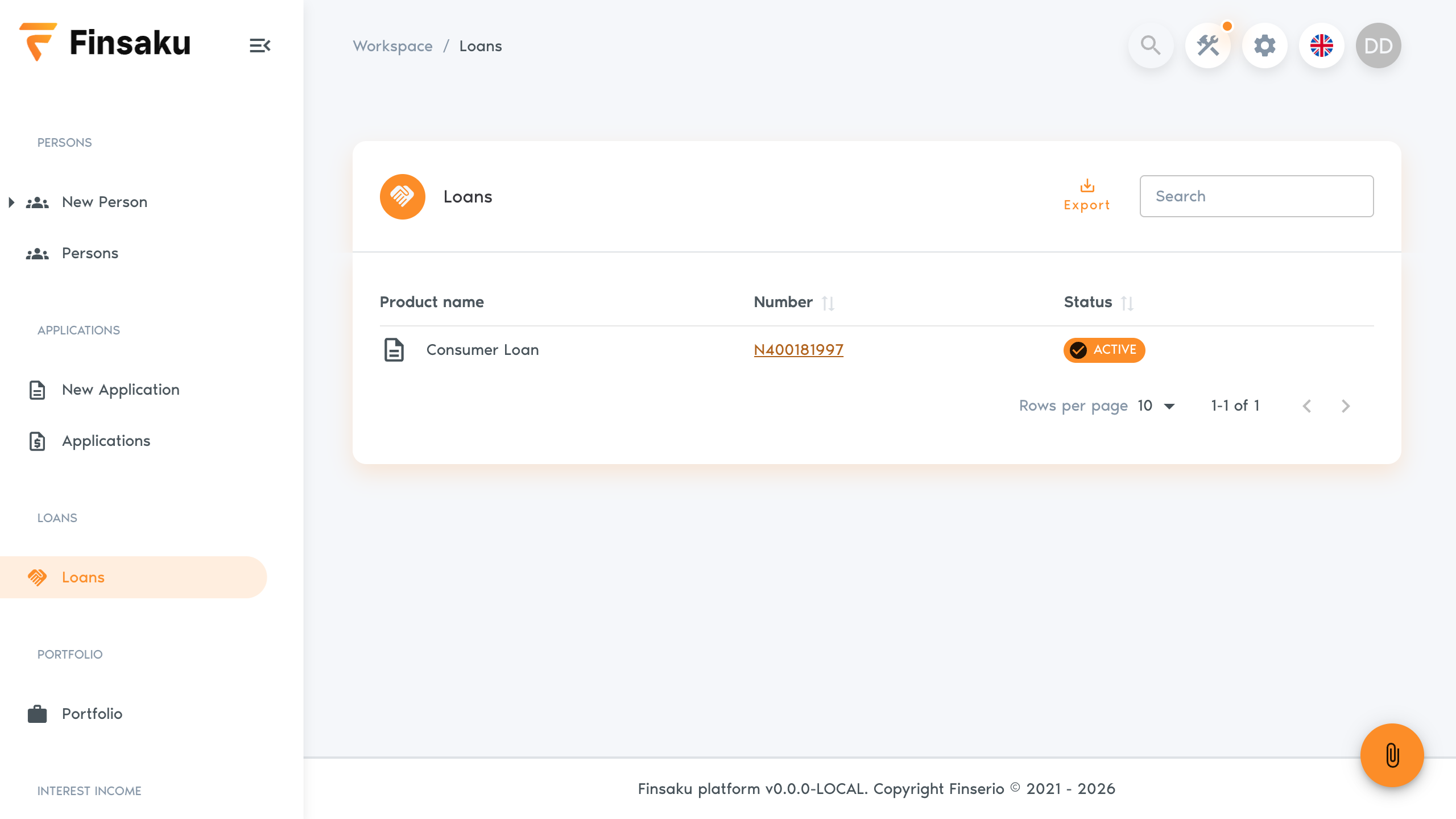
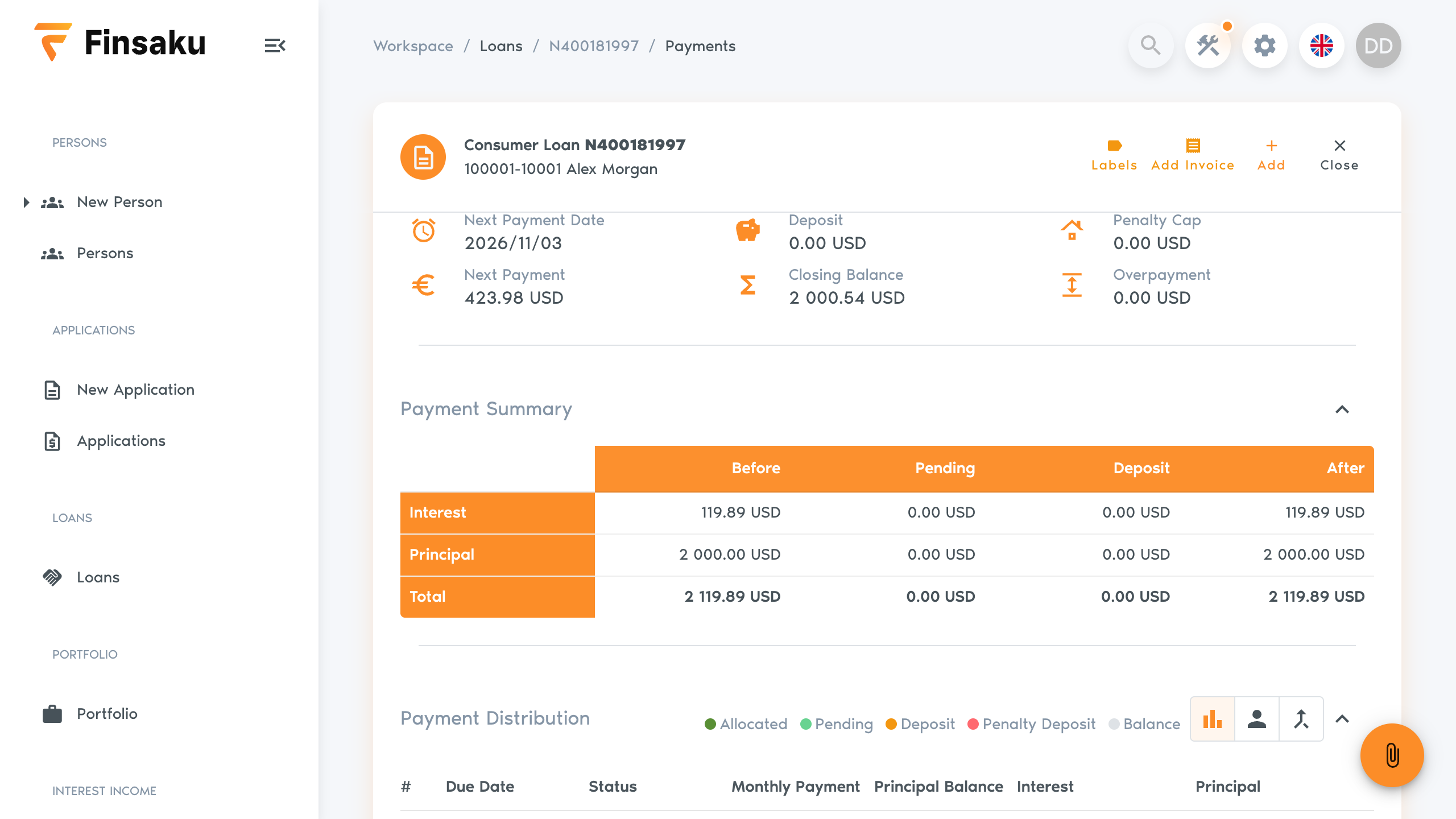
Review active terms and schedules, record money received, inspect payment allocations, and use permitted actions such as Change, Renew, Terminate, or Reinstate.
Documents, messages, and enrichment
Store supporting documents, generate files from product templates, send email or SMS messages from configured templates, add notes and labels, and review enabled enrichment results.
Queues, search, and reporting
Use administrator-configured saved queries for personalised Workspace lists, global search, assignments, and exports, then review portfolio, income, activity, and audit views.
Products, data, and workflows
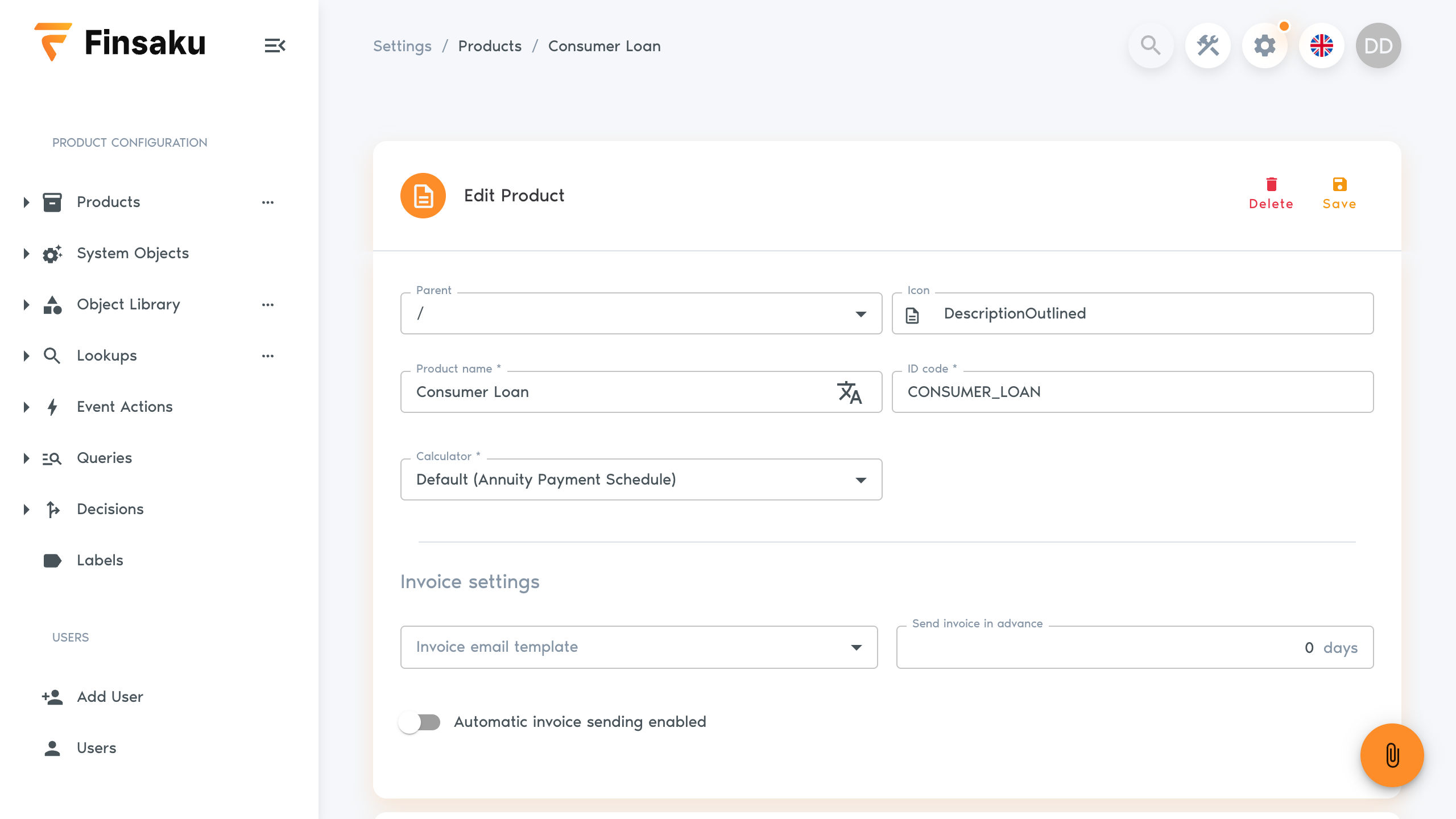
Define product groups and versions, collected fields, lookups, templates, decisions, and event actions used by lending operations.
Users, integrations, and AI clients
Control users, permission groups, partner affiliations, external provider connections, the in-app assistant, and authorised MCP clients when the MCP server is available.
Guided workflows
Complete a first task
Follow an operational task from its starting state to an observable result. For a new organisation, begin with the initial setup guides.
Configure collected data
Understand shared System Objects, build a reusable Object Library definition, attach it to a product version, and check its fields in a new application.
Open the data setup About 40 minutesConfigure repeated and nested objects
Collect several structured entries without duplicating a reusable nested definition such as Address.
Open the advanced object quickstart About 20 minutesProcess a first application
Find the borrower, calculate the requested terms, complete review, and verify the loan created by lending.
Open the application quickstart About 20 minutesSet up integration partners
Connect and enable the document, email, and SMS providers required by customer communications.
Open the integration quickstart 30–45 minutesSet up documents and communications
Upload an agreement template, add approval email and SMS templates, then generate and send them manually.
Open the template quickstart About 30 minutesAdd event-driven triggers
Generate an agreement and send approval messages automatically when a matching application event occurs.
Open the automation quickstart About 15 minutesService a loan and record a payment
Check an active loan, record one incoming payment, and account for its allocation and resulting balance.
Open the servicing quickstart 15–30 minutesConfigure access for a new user
Create two role groups and users, then confirm their application-processing boundaries with impersonation.
Open the access quickstartLearn by responsibility
Follow a role-based route
Use a sequenced route when you need more than one procedure. Each path links the relevant tasks and finishes with checks you can demonstrate.
Loan officer
Borrowers, calculation, review, and lending hand-off.
Follow this route → Active loansServicing user
Receipts, allocation, schedules, and loan changes.
Follow this route → OversightOperations manager
Queues, reporting, exceptions, and recorded activity.
Follow this route → ConfigurationTenant administrator
Products, workflows, user access, and settings.
Follow this route → ConnectionsIntegration administrator
Providers, dependencies, failures, and reconciliation.
Follow this route →Browse the guide
Find instructions by task
Use the area that matches the record you are working with or the configuration you need to maintain.
People and applications
Find or create a borrower, start an application, enter terms, and complete review and lending.
Open borrower and application guidance ServicingLoans and payments
Review an active loan, change its terms, record a payment, and understand the resulting allocation.
Open loan servicing guidance OperationsLists and reporting
Use saved lists, global search, exports, assignments, portfolio measures, and interest-income views.
Open list and reporting guidance ConfigurationAdministration
Configure products, collected data, queries, decisions, event actions, integrations, and user access.
Open administration guidance